
Who We Are
Celebrating 20 Years of Impact
For 20 years, Colon Screening for Life—together with our dedicated community partners and sponsors—has worked to increase the number of colorectal cancer survivors. What began as a local effort has grown into a powerful, communitywide mission focused on education, prevention, and the lifesaving importance of early detection.
Through events like the Colon Screening for Life 5K Run/Walk and 1 Mile Walk, we have spent two decades bringing people together to raise awareness, encourage regular screenings, and support individuals and families affected by colorectal cancer. Every step taken and every conversation started over the last 20 years has helped save lives.
What is Colorectal Cancer?
Colorectal cancer is a disease in which cells in the colon or rectum grow out of control. It is sometimes referred to simply as colon cancer. The colon—also known as the large intestine or large bowel—plays a key role in digestion, while the rectum is the passageway that connects the colon to the anus.
The colon includes several sections: the cecum, ascending colon, transverse colon, descending colon, sigmoid colon, and rectum. Colorectal cancer can develop in any of these areas.
How Colorectal Cancer Develops
Sometimes abnormal growths called polyps form in the colon or rectum. Over time, some polyps can turn into cancer. The good news is that screening tests can detect polyps early, allowing them to be removed before they become cancerous.
Screening also helps detect colorectal cancer at an early stage, when treatment is most effective and survival rates are highest.
Types of Polyps
There are two main types of polyps found during screenings:
- Adenomatous polyps (adenomas): These polyps can sometimes develop into cancer and are considered a precancerous condition.
- Hyperplastic and inflammatory polyps: These are more common and, in most cases, are not precancerous.
Regular screenings save lives. As we celebrate 20 years of Colon Screening for Life, we remain committed to educating, advocating, and inspiring action—because early detection truly makes a difference, today and for generations to come.
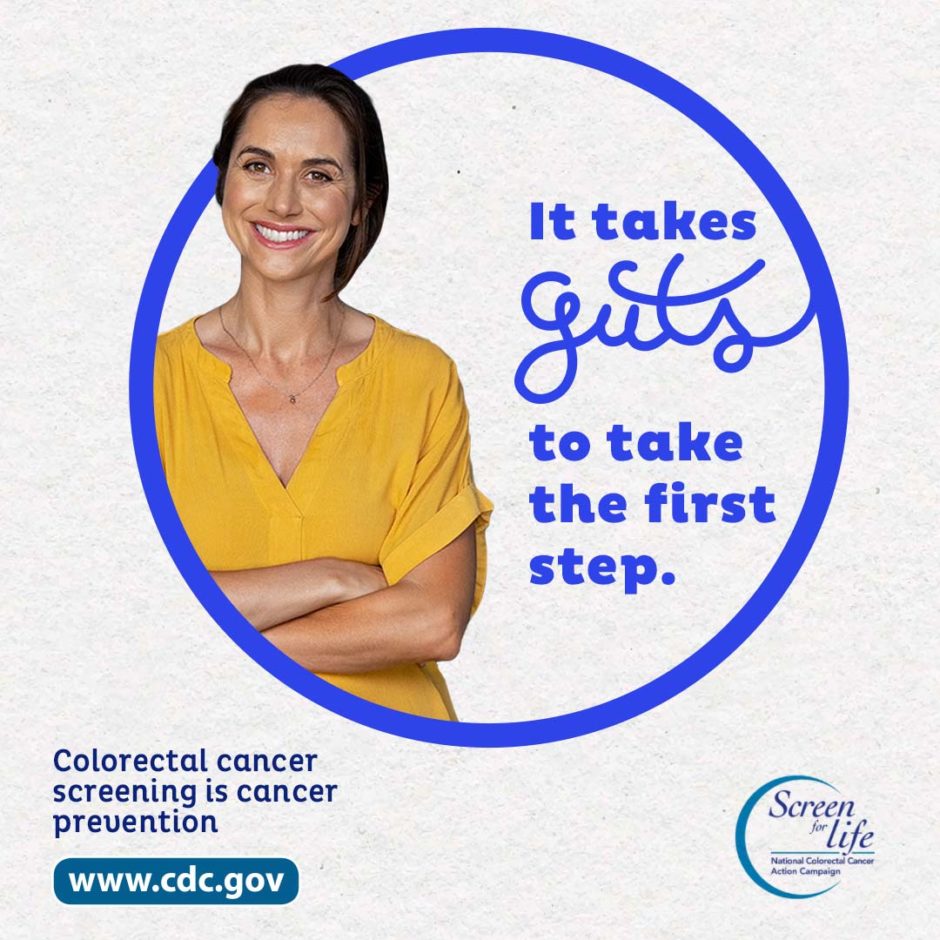
Get Screened
Men and women who are 45 years old or older need to be screened for Colorectal Cancer. It takes guts to take the first step!
Talk to your doctor about which test is right for you.